

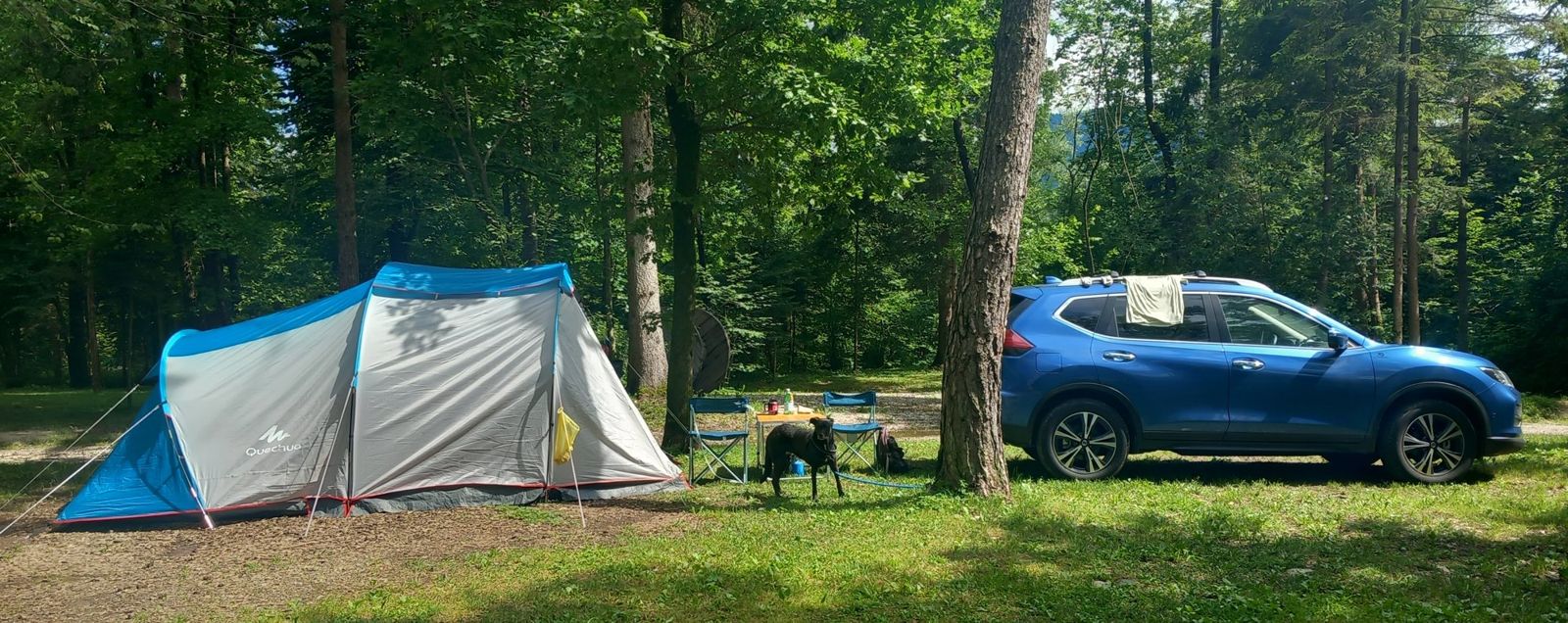
Camping for beginners in Eastern Europe
Everything for your first time, from checklist to thunderstorms, with a source.
Home › Camping › Camping for beginners in Eastern Europe
Never camped before, and going straight to Eastern Europe? That is possible. This page lists what a beginner needs to know, from the first checklist to what to do in a thunderstorm. Where we have a source, we name it. Where it is our own estimate, we say so. Many pieces of advice come from the ANWB; it writes partly for caravans and camper vans, but what we take over here also applies to the tent.
Getting started · Checklist · Choosing a campsite · Pitching · Sleeping · Cooking · Electricity · Sanitary facilities · Costs · Passport · Weather · Safety · Children
First time
Start smart: how far, when and how long?
The ANWB source for beginners advises: do not start too far from home, choose a destination with good infrastructure and comfortable pitches, preferably go in a warm season (hardships are smaller than in cold and rain) and rent before you buy anything. Source: ANWB Camping: camping for beginners.
Eastern Europe as a first time
That is fine, but campsites in the Balkans, in Romania and in the Baltic states are often smaller and simpler than in Western Europe, usually with electricity though (ACSI Eurocampings, see our overview Camping by country). Our estimate: for the first time choose a country that is close and easy to reach, such as Slovenia or Czechia, book the first nights in advance and only then build up a larger tour.
Take it easy
The ANWB tips from experienced campers: create space, slow down, plan breaks, enjoy and do not take everything too seriously. After a long drive or a rainy day, plan some time to be apart for a while.
Source: ANWB Camping: camping for beginners.
Don't arrive too late
On arrival you lose more time than you think. Nobody gets cheerful looking for tent poles at dusk. So on a changeover day, leave in good time (ANWB, tips for solo campers, also applies to families).
Source: ANWB: seven tips for the solo camper.
Checklist
Checklist for your first time camping
A compact list in three steps. For the complete list with car, children and health: our printable Packing list.
Preparing at home
- Pitch the tent once in the garden or living room and also practise packing it up (ANWB, A.S.Adventure).
- Mark the tent poles with coloured tape (ANWB).
- Test air beds, stove and lamps; count pegs and bring a hammer (ANWB).
- Pack duct tape, earplugs, pocket knife, fire starters and a plastic tablecloth (ANWB: indispensable).
- Reserve the first campsites, certainly in July and August (ACSI).
- Check the documents for everyone and the mandatory equipment per country: see our Packing list.
On the road
- Soft bags fit better in tight spaces; heavy items such as the tent and cooking gear low against the back seat, light items on top (ANWB).
- Put what you need on arrival (tent, head torches) on top.
- Bring water and food for two days in case the shops are closed (ANWB).
- Arrive well before dark (ANWB).
On arrival
- Report to reception; keep your passport, ID or Camping Card at hand (ANWB, CCI).
- Choose a flat, slightly raised spot without stones and dead branches above you (ANWB).
- First set up the tent and the sleeping areas, then the kitchen.
- See where the sanitary facilities, bins and water are and ask about the amperage if you need electricity.
Choosing a campsite
Choosing a campsite that suits your family
The most important difference is in the facilities: from simple sanitary facilities in the middle of the forest to a campsite with a swimming pool, shops and entertainment. If you do not know what you like, try both. Source: ANWB Camping: camping for beginners.
Family campsite or nature campsite
According to the ANWB, larger campsites often have swimming paradises, playgrounds and entertainment teams. Prefer peace and quiet? Choose a nature campsite where children can amuse themselves in a stream, forest or play field. Children quickly make friends, especially at a campsite that is popular with peers.
Pay attention to the sanitary facilities
Sanitary facilities are one of the most important points for a good holiday: at ANWB-approved campsites they count, together with the grounds, for 60 percent of the star score. Those stars do not apply to all campsites in Eastern Europe; read recent reviews there and look at photos of the sanitary facilities (our tip, see also our overview Camping by country). Family campsites often have children's sanitary facilities and a family shower.
Booking in summer
In July and August there is hardly any space available on the Croatian coast in Istria and northern Dalmatia; It is also full on the Polish Baltic Sea and in the Carpathians. Make a reservation first.
Source: ACSI Eurocampings, see our overview Camping by country.
Wild camping is not for beginners
According to the ANWB, wild camping is more for advanced campers or daredevils and in many countries is strictly regulated or prohibited, with fines as a result. In many of our countries it is prohibited (for example Slovenia, Croatia, Hungary and Romania), in Estonia, Latvia and Lithuania it is allowed under conditions; the rule per country is on the page Camping by country.
Source: ANWB Camping: camping for beginners.
Pitching
Pitching your tent: spot, pegs and storm-proofing
According to the ANWB, you pitch the tent once at home in the garden or living room, so that you know whether everything is complete. Source: ANWB: pitching a tent firmly.
The right spot
Flat, free of stones, branches and pine cones, slightly raised (water flows to the lowest point) and watch what hangs above you: resin, bird droppings and falling branches. Never pitch the tent in a hollow or under a tree with lots of dead branches, and put the entrance out of the wind.
Sources: ANWB: pitching a tent firmly, A.S.Adventure: how to choose the best tent.
Marking the poles
Put coloured tape around each tent pole or tube section, then you immediately know which part goes where. Pitch the tent tight with the zips closed, then the shape stays good.
Source: ANWB: pitching a tent firmly.
Footprint
Put a footprint or foil under the groundsheet (without plasticisers, which can damage the coating) and do not let it stick out, otherwise rainwater runs in between.
Source: ANWB: pitching a tent firmly. More at Camping gear.
Pegs by ground type
Soft grass ground: steel pegs. Sandy soil: wide plastic pegs with a screw thread. Hard clay: long steel rock pegs. Rocky ground: solid rock pegs or pegs with a hammer tip. Snow or beach: extra wide or perforated pegs. You do not know in advance what you will get, so bring a mix.
Source: ANWB: pitching a tent firmly.
Sleeping
Sleeping: sleeping bag, mat and a good night
Details and products by budget are at Camping gear (part of Sleeping). Here are the basics.
Warm enough
Choose a sleeping bag by its comfort temperature, not its limit, and bring a good mat or air bed: it insulates from the cold ground. Even in summer it can get chilly at night; the ANWB recommends a warm jumper, long trousers and thick socks.
Sources: our page Camping gear, ANWB: what to bring when you go camping.
Earplugs and pillow
The ANWB mentions a pillow (you really do sleep better) and earplugs (against snoring neighbours, crickets or a campsite disco) as small things with a big effect.
Duct tape and spares
Duct tape, a pocket knife, fire starters and a plastic tablecloth are on the ANWB's 'indispensable' list. A tear in the tent or a leaking air bed is quickly repaired.
Cooking
Cooking and eating at the campsite, safely
Which gas cartridge fits which appliance and where to buy gas is at Camping gear (part of Cooking on gas). In Bosnia and Herzegovina camping gas is not for sale and in Hungary often hard to get (ACSI Eurocampings): bring enough.
Cooking safely
Put the stove on a sturdy, flat surface in a quiet spot, away from tent fabric and dry vegetation, keep children away and ensure good ventilation. Keep a bucket of sand or water ready; if the pan catches fire, put the lid on.
Source: ANWB: camping safely.
Barbecue and gas
Briquettes do not spark and are safer than charcoal; light the barbecue only with firelighters, not with methylated spirits. Put a gas bottle next to the barbecue, not underneath it. Check gas hoses for cracks; replace them if they are older than five years. Keep a fire extinguisher or fire blanket within reach.
Source: ANWB: camping safely.
Electricity
Electricity and plugs at the campsite
With a tent you usually only need a few things: light, a charger and maybe a cool box. Electricity comes from a power box or power post at the campsite.
Blue CEE plug
For the power box at the campsite you use a cable with a blue CEE plug (standard IEC 60309). The ANWB mentions: cable at most 25 metres, neoprene (H07RN-F) with wires of at least 2.5 mm², and always unroll a reel completely, otherwise the cable can overheat. Also put an earth-leakage circuit breaker between the power post and your appliances.
Sources: ANWB Camping: CEE plug, ANWB: camping safely.
Adapter plug
Some campsites abroad have no CEE connection; then bring an adapter plug (ANWB). According to the ANWB, especially smaller campsites in Southern Europe often only have ordinary sockets. How this works in each Eastern European country we have not yet researched: ask the campsite when booking.
Sources: ANWB: electricity in the caravan, ANWB Camping: CEE plug.
How much power?
Ask at reception how many amps the connection has (usually 2 or 4 amps or more, says the ANWB). Amps times 230 volts is the number of watts; add up what you use at the same time (hairdryer, kettle, cool box), otherwise the fuse will blow.
Source: ANWB: electricity in the caravan.
Sanitary facilities
Toilets and showers at the campsite
In a tent you have no toilet or shower of your own; you find those at the campsite (ANWB). Source: ANWB: camping with the family for the first time.
Types of sanitary facilities
There are children's sanitary facilities (low washbasins and toilets, often with a family shower and changing table), facilities for people with disabilities and at luxury campsites sometimes private sanitary facilities at the pitch. Check what is available when choosing a campsite.
Flip-flops and small change
Flip-flops for the shower are on our Packing list. At simple campsites the sanitary facilities may be more basic than you are used to (ACSI, see Camping by country); so also bring toilet paper and hand soap (our tip).
Costs
What does camping cost, and how do you save?
We do not mention amounts per campsite or country here: we have not yet researched them per country and they vary greatly per campsite and season. But do note this.
CampingCard ACSI
In participating seats, you pay a fixed, cheaper price per night in pre- and post-season; Tourist tax comes in, and the valid weeks differ depending on the place.
Source: CampingCard ACSI, see our overview Camping by country.
Camping Card International (CCI)
According to the publisher, the CCI gives a discount at participating campsites, up to 40 percent; you have to ask for it in advance, the discount applies for a maximum of 21 consecutive days and not for seasonal pitches. These conditions differ per campsite, so ask when booking.
Source: Camping Card International.
Tourist tax comes on top
In Slovenia and Croatia you pay tourist tax per person per night at the campsite on top of the price; the amount differs per municipality. For families the children's ages matter: in Slovenia children under 7 pay nothing and those aged 7 to 18 pay half, in Croatia children under 12 pay nothing and young people aged 12 to 18 pay half. When you pay, check that the ages are correct on the bill (our tip).
Sources: Slovenian Tourism Act ZSRT-1, article 18 (Tax-Fin-Lex), Croatian Tourist Tax Act (Zakon o turističkoj pristojbi).
Plan smart
The low season (May, June, September) is quieter in many places; that is our estimate, we have not done a price comparison per season. See our page Best time to travel by country for the weather by month.
Passport
Hand over your passport at the campsite? Camping Card and camping card
By law, campsites and hotels must register guests at check-in, also abroad (ANWB). You do not have to show your BSN (Dutch citizen service number) for this. Source: ANWB: whether or not to hand in your passport.
What does the ANWB advise?
The Dutch government advises not to hand over your identity document. The ANWB tips: ask in advance whether you can email the details, make your own copy with your photo and BSN masked, or use the government's Kopie ID app. If the receptionist wants to keep your passport, explain that you need it for a police check. Suggest a prepayment or credit card guarantee as a deposit. In Croatia, according to ANWB members, the passport is sometimes kept for a number of days for checks.
Camping Card International
At most campsites the CCI can serve as proof of identity, so you keep your passport, and it includes liability and accident insurance during your stay at the campsite. Campsites are not obliged to accept the card. At participating campsites you can identify yourself with the ANWB Kampeerkaart CKE instead of with your passport.
Sources: Camping Card International, ANWB: whether or not to hand in your passport.
Why Croatian campsites ask for your details
In Croatia the campsite must register every guest in the national eVisitor system within 24 hours of arrival, and deregister them within 24 hours of departure. That is why reception asks for your passport or ID card. How you provide your details can often be discussed: see the ANWB tips above.
Source: Croatian Tourist Tax Act (Zakon o turističkoj pristojbi) (article 22).
Weather
Weather: rain, thunderstorms, wind and heat
The weather can change quickly, even in summer. This is what the ANWB advises, supplemented with what we already say on our pages about the regions: in the mountains, fast thunderstorms are normal. Source: ANWB: severe weather at the campsite.
Rain
Pull the canvas tight, set one corner slightly lower so that water runs off and move to higher ground if you are in a hollow. Cotton canvas may 'leak' a little at the first drops; that stops once the canvas is wet.
Source: ANWB: severe weather at the campsite.
Thunderstorm
The chance of a lightning strike is small. Before the thunderstorm: unplug the power cables. According to the ANWB, it is better to swap your tent for the car, a stone building such as the canteen or the neighbours' aluminium caravan.
Source: ANWB: severe weather at the campsite.
Storm
From about wind force 7 your tent needs to be anchored more firmly. If wind force 10 or higher is forecast, according to the ANWB you had better pack up and look for a hotel. Clear away loose items, check all guy points, use storm lines and close all zips.
Source: ANWB: severe weather at the campsite.
Heat
In full sun a tent is a greenhouse (ANWB test). Choose a shady spot, open the ventilation flaps and consider a tent with heat-reflecting fabric. See Choosing a tent.
Safety
Safety: belongings, animals and ticks
Camping is usually safe, with a few standard precautions.
Things
Do not leave anything in sight, for example on the campsite table or in the awning, not even at night. Switch on 'find my phone' and note the IMEI number somewhere you can find it. Filing a police report abroad is often difficult.
Source: ANWB: camping safely.
Bears and other animals
Brown bears live in the Romanian Carpathians and in Slovakia. According to WWF Romania, you do not take food, cosmetics or toothpaste into the tent, you take your rubbish with you and you preferably choose a fenced campsite. More at Camping gear, part per region.
Ticks and mosquitoes
In forests and tall grass, ticks can transmit tick-borne encephalitis (TBE); wear long clothing and check your children for ticks. Sources and tips are at Camping gear, part of Mosquitoes and ticks.
Landmines in Bosnia
In Bosnia and Herzegovina you stay on roads and paths because of landmines (see our page Bosnia and Herzegovina and Camping by country).
Children
Camping with kids: tips for the first time
Our packing list has a separate children's list (cuddly toy, swimming things, rain suit, books, films). This comes on top.
Keeping things familiar
Your own pillow and cuddly toy make an unfamiliar place to sleep more familiar (our packing list). Children lose a lot of heat through their heads: a little hat helps on cold nights (our page Camping gear).
Rainy afternoon
With children, Pitchup recommends a larger awning, to store toys and play when the weather is bad. For bad weather the ANWB points to outings such as museums and indoor play paradises; our page Activities with kids has tips per country and region.
Sources: Pitchup: buying a tent, ANWB: severe weather at the campsite.
Friends and tasks
Children quickly make friends at a campsite (ANWB). Let the children help with small tasks, such as handing out pegs or doing the dishes; that gives you some peace (our tip).
Further reading
More about camping
Sources
Where does this come from?
- A.S.Adventure: how to choose the best tent
- ANWB Camping: CEE plug
- ANWB Camping: camping for beginners
- ANWB Camping: sanitary facilities at the campsite
- ANWB: electricity in the caravan
- ANWB: severe weather at the campsite
- ANWB: whether or not to hand in your passport
- ANWB: pitching a tent firmly
- ANWB: camping safely
- ANWB: camping with the family for the first time
- ANWB: what to bring when you go camping
- ANWB: seven tips for the solo camper
- Camping Card International
- Croatian Tourist Tax Act (Zakon o turističkoj pristojbi)
- Pitchup: buying a tent
- Slovenian Tourism Act ZSRT-1, article 18 (Tax-Fin-Lex)
All sources were opened on October 15, 2026 and loaded at that time. This is general information, not medical or legal advice. Rules and prices change: Check them shortly before departure. Note: Most sources are Dutch.