

Which tent should you choose for a family?
Tent types compared, with prices and tests that we could check ourselves.
Home › Camping › Which tent should you choose for a family? Types, prices and tests
Those who travel to Eastern Europe with their family need a tent that stands fast, stays dry and offers enough space on a rainy afternoon. Below we explain the tent types, compile prices with source and summarize current tests by ANWB, Stiftung Warentest and ADAC. We call prices only if we have seen them in a source; Each price has source and date.
In brief · Tent types · Prices · What do you look for? · Tests · Eastern Europe
Short answer
In brief
For a family of four with children, a tunnel tent or inflatable tent with separate sleeping cabins and living space is usually the most pleasant. A domed tent is easy and cheap, but you can not stand in it and the space is scarce; A roof tent is expensive and does not fit every car. This is our assessment based on the sources on this page; Your situation may be different.
- Several nights in one place? Choose a tunnel or inflatable tent: You have space to sit together in the rain.
- Almost every day (round trip)? Choose a tent that stands fast: an inflatable tent or a roof tent if car and budget allow.
- Never camped? Rent or borrow first. The ANWB indicates the rental of an established tent on the campsite; The ADAC advises to borrow or rent a roof tent first.
Types
Tent types compared: dome, tunnel, inflatable, pop-up and roof tent
The advantages and disadvantages according to the sources below. What our own assessment is, stands in each case.
Dome tent
Pros: light, compact and usually the cheapest. Due to the shape, it is stable in the wind (pitchup), and you can lift and move it as a whole (A.S.Adventure).
Cons: little standing height and little space. The domed tents in the ANWB test 2025 were 115 to 120 cm high, and the indication “for three people” should be treated with caution, according to the ANWB. Construction: In the same test, everyone could set up each tent in half an hour, even without experience. For a family of four, it is especially suitable as an additional sleeping tent for the children (our assessment).
Sources: Pitchup: buying a tent, A.S.Adventure: how to choose the best tent, ANWB tent test 2025 (dome tents), ANWB: how we tested the tents (2025).
Tunnel tent
Pros: a good deal of acquis or a good deal of acquis, a good deal of acquis, a good deal of acquis, a good deal of acquis, a good deal of acquis, a good deal of acquis, a good deal of acquis, a good deal of acquis, a good deal of acquis, a good deal of acquis. You first set up the outer tent so that the inner tent remains dry when it rains during construction (A.S.Adventure).
Cons: it must be tightened with guy lines (A.S.Adventure) and is heavier: A.S.Adventure calls for tents in autocamping 5 to 25 kg. Put the narrow side in the wind (our tip).
Sources: ANWB: choosing a tent, A.S.Adventure: how to choose the best tent.
Inflatable tent (air tent)
Pros: air hoses instead of rods. Pumping up is fast, costs little power and results in a storm-resistant construction, according to the ANWB; Pitchup calls them as stable as tents with poles, but built faster. The ANWB says that they are not inferior in terms of strength.
Cons: unpacked is not more convenient, not more portable, not more portable, not more portable. Stiftung Warentest notes at the test winner for families that there was no pump and the inner walls of the porch became damp during prolonged use.
Sources: ANWB: 8 compact family tents (2020), Pitchup: buying a tent, ANWB: choosing a tent, Stiftung Warentest: Zelte im Test (July 2026).
Pop-up or throw tent
Pros: the easiest tent to build; it opens itself, you just have to take herring (ANWB). Ideal for festival, beach or as a side tent.
Cons: not very large (ANWB), difficult to repackage (A.S.Adventure); Stiftung Warentest writes for one of the tested models, packing requires skill and patience and according to A.S.Adventure less waterproof, so nothing for heavy or long rain.
Sources: ANWB: choosing a tent, A.S.Adventure: how to choose the best tent, Stiftung Warentest: Zelte im Test (July 2026).
Roof tent
Pros: sleeping above the floor and quickly opened and closed. In the ADAC test (2022, seven roof tents without hard shell) there was room for two adults and two not too large children in each model; The ADAC recommends models with a covered entry.
Cons: expensive (see price table), most weigh more than 50 kg and the assembly is done according to ADAC for two or better to four, and on the roof it ensures noticeable additional consumption. In addition, the car is fixed as long as the tent is open (our note). The ADAC found fabrics in some tent fabrics and mattresses above the limits for children's toys and urges manufacturers to comply with them.
Source: ADAC: Dachzelte im Test.
Folding camper
A trailer that folds out to the tent with beds and often a kitchenette. Comfortable and dry, but you drive with trailer: pay attention to toll, vignette class and speed rules per country (see our page) Traffic rules & equipment) The ANWB calls the folding caravan as a “back to basic” option next to the tent. We have not checked prices for folding caravans.
Bungalow tent and tipi tent
The ANWB describes the bungalow tent (high front, lower back, much living space and several sleeping cabins) and the tepee (cone shape, spacious, also called bell tent or pyramid tent). Both are often rented out on campsites, according to the ANWB: a way to try them out. We did not check prices.
Source: ANWB: choosing a tent.
Prices
What does a tent cost? Prices by type, with source
Only prices we have seen in a source, with the date of the source. They are examples and not a complete overview.
| Type | Example | Price | Source and date |
|---|---|---|---|
| Pop-up tent, 2 people | Coleman FastPitch Galiano 2 | from € 82 | Stiftung Warentest, 14 July 2026 (price in Germany) |
| Dome tent, 2 to 3 people | Quechua MH100 XL Fresh&Black and Turbat Borzhava XL 3 Alu (ANWB test) | € 109 and € 279 | ANWB tent test 2025 |
| Dome tent, 3 people | Coleman Kobuk Valley 3+ | from € 150 | Stiftung Warentest, 14 July 2026 (price in Germany) |
| Dome tent, 4 people | Quechua MH100 (see Camping gear) | € 64,99 | Decathlon.nl, Oct 2026 (see Camping gear) |
| Tunnel tent with poles, 4 people | Skandika Hafslo 4 Sleeper Protect (seller on Decathlon.nl); 17 kg, 5,000 mm water column according to shop page | € 329 (previously € 399) | Decathlon.nl, 15 Oct 2026 |
| Inflatable tent, 4 people | Quechua Air Seconds 4.1 Fresh & Black (Stiftung Warentest: family tent test winner) | about € 400 | Stiftung Warentest, 14 July 2026 (price in Germany) |
| Inflatable tent, 4 people | Obelink Summer 4 Easy Air (tunnel) to Outwell Sacramento 4 Air | € 299 to € 879 | Obelink and Decathlon, Oct 2026 (see Camping gear, where the shop links are) |
| Compact family tents (2020) | From Safarica Blackhawk 300 Deluxe to Nomad Dogon 4 Compact (ANWB test) | 299 to 1.099 euros (prices of 2020, different today) | ANWB, test from 2020 |
| Roof tent (2 adults and 2 children) | Seven roof tents in the ADAC test, including mattress and awning; a roof rack comes on average for about 150 euros | around 1.850 to just under 3.400 euros | ADAC, test from 2022, article of 22 February 2024 |
| Roof tent, 4 people | Quechua Roof Tent 500 Family Fresh&Black (see Camping gear) | € 1.999,99 | Decathlon.nl, Oct 2026 (see Camping gear) |
The ANWB generally says: A simple, cheap tent costs from a few tens of euros, for a high-quality tent you pay at least about a hundred euros, and a large luxury tent can go into the thousands (source): ANWB: choosing a tent) Change prices and promotions, especially at Decathlon and Obelink; Always check in the shop itself. Shop names are not a recommendation, and we do not receive any compensation for this site. For folding caravans, bungalow tents and tepees we did not check prices.
Buying
What do you look for when choosing a tent?
Water column
The ANWB required in its test 2025 for average Dutch use 3,000 mm water column for tent flooring and seams; only one in five tents managed this. Pitchup calls 2,000 suitable for the wet climate of Western Europe and 3,000 or more if you often camp in bad weather. In the Carpathians and on the Baltic coast showers can be intense (see our page) Camping gear): rather a bit more margin (our estimate).
Sources: ANWB: how we tested the tents (2025), Pitchup: buying a tent.
Groundsheet and footprint
Pitchup: a sewn-in tent floor keeps insects outside and makes the tent warmer in the cold; A loose floor allows more air to pass through during heat and is often easier to fold. A base protects the tent floor. Do not let the base protrude under the tent, otherwise rainwater runs in between (ANWB). More on this Camping gear.
Sources: Pitchup: buying a tent, ANWB: pitching a tent firmly.
Tent fabric
Polyester dries quickly, does not absorb moisture and is light but breathes poorly and becomes warm in the sun. Cotton polyester offers a better living climate in warm weather and lasts longer with good care, but dries slower, is heavier and more expensive (ANWB 2020; the ANWB guide calls similar for cotton).
Sources: ANWB: 8 compact family tents (2020), ANWB: choosing a tent.
Poles or air
Aluminum bars are lightweight, stable and slide well through the channels. Glass fiber is cheaper but heavier and can break under pressure; Steel is stable, but very heavy. An inflatable tent has no poles and is set up quickly, but getting the air out again takes effort (ANWB 2020; Pitchup; A.S.Adventure).
Sources: ANWB: 8 compact family tents (2020), Pitchup: buying a tent, A.S.Adventure: how to choose the best tent.
Heat and ventilation
In full sun, a tent is a greenhouse, despite ventilation openings. In the ANWB test, the inner tents with heat-reflecting fabric (Quechua and Coleman) remained cool and dark for the longest time. This is helpful on the Balkan coast in July and August. In addition, condensation is almost always produced, so good ventilation is important (ANWB 2020).
Sources: ANWB: how we tested the tents (2025), ANWB: 8 compact family tents (2020).
Space and number of people
Pitchup: a four-person tent does not comfortably fit four people, because luggage is not counted. Choose a tent for at least two people more than will sleep in it and, as a rule of thumb, allow at least 1.8 m² of floor per person. With children, Pitchup recommends a larger awning for toys and playing in bad weather.
Source: Pitchup: buying a tent.
Season
A 2-season tent is for warm weather with occasional showers, a 3-season tent also withstands rain and wind in spring, summer and autumn; A 4-season tent is for snow and frost. For a summer holiday by car, a 3-season tent makes sense (our assessment; in the mountains and the Baltics the nights can be cool).
Sources: ANWB: choosing a tent, A.S.Adventure: how to choose the best tent.
Pegs and guy lines
The subsurface determines the herring, not the tent: steel herrings for soft lawns, long steel nails for hard clay, massive rock nails at rock bottom. You don’t know what the floor is like beforehand, so take a mix with you. Storm lines provide additional support in strong winds.
Source: ANWB: pitching a tent firmly.
Tests
Recent tent tests by ANWB, Stiftung Warentest and ADAC
We summarize each test in our own words. All four pages were readable without a subscription on 15 October 2026; open the source for the full result and conditions.
ANWB tent test 2025: five dome tents
The ANWB exposed each tent to a rain and wind system for an hour (wind force 5), had it set up by camping experts, measured the heating in the laboratory and tested the watertightness of the tent floor and seams as well as the strength of herring loops and rods. Result: Quechua MH100 XL Fresh and Black (109 euros) received 8.3 and became test winner and price tip, Turbat Borzhava XL 3 Alu (279 euros) 8.1, Coleman Darwin 3-Plus Blackout 7.3, Origin Outdoor Hyggelig 3 6.6 and Easy Camp Lomsdal 3 5.9 (it leaked in the rain test). The explanation of the test points is here: ANWB: how we tested the tents (2025).
ANWB: 8 compact family tents (2020)
Best rating: Bardani Airwave 320 (inflatable four- to five-person tent, at that time 499 euros). Price tip: Quechua Airseconds Fresh & Black 4.2 (then 399.99 euros, build time 15 minutes). The explanation of tent fabric (polyester or cotton polyester) and rods or pumps is helpful.
Stiftung Warentest: Zelte im Test (article of 14 July 2026)
The testers from Which set up all tents a week in spring at a campsite in the English county of Surrey and tested daily weather resistance (wind, rain, hail, snow) as well as construction and disassembly, zippers, herring, credit lines, storage space and residentiality. Test winner in the family tents: the partly inflatable Quechua Air Seconds 4.1 Fresh & Black for four people (around 400 euros in Germany). For the dome tents, the article mentions the Coleman Kobuk Valley 3+ (from 150 euros), for the throw tents the Coleman FastPitch Galiano 2 (from 82 euros). One reader pointed out in the comments an ambiguity in a Quechua pitch tent; Stiftung Warentest confirmed there a price of 89.90 euros for the Wurfzelt model.
ADAC: Dachzelte im Test
Construction and degradation, processing, weather resistance, pollutants and camping suitability were evaluated. No model failed: six received “good”, one “very good”. Test winner: Thule Tepui Autana (grade 1.5; the model is now called Thule Tepui Kukenam). The most expensive model was last. The article also gives assembly tips and advises checking if the tent and roof rack fit together.
Consumentenbond: we found no publicly accessible tent test. Their test pages can only be read by members of Kies & Koop, and a search for tents on consumentenbond.nl returned no article (checked 15 Oct 2026). As soon as there is a freely readable test, we will include it.
Eastern Europe
Which tent suits Eastern Europe?
This is our own assessment, based on the tests above and the regional division on our side. Camping gear.
On the coast (Croatia, Montenegro, Albania, Bulgaria)
In July and August it is hot there. Watch for ventilation and a heat-reflecting or cool material (see the ANWB heat test above), bring stable herring and use all guy lines: On the Croatian coast, the Bora can suddenly emerge (see Camping gear, part per region).
In the mountains and the Carpathians (e.g. Slovenia, Slovakia, Romania, Czechia)
The nights can be cold and thunderstorms start quickly. A tent with high water column and stable guy lines provides security; In storms, storm lines and additional herring are a good investment, according to the ANWB. On our side Camping for beginners what to do in a thunderstorm.
Baltic states and Poland
Cool nights, even in summer, and many mosquitoes on the water. Choose a tent with good mosquito grid and bring a warmer sleeping bag or an extra blanket. More per region Camping gear.
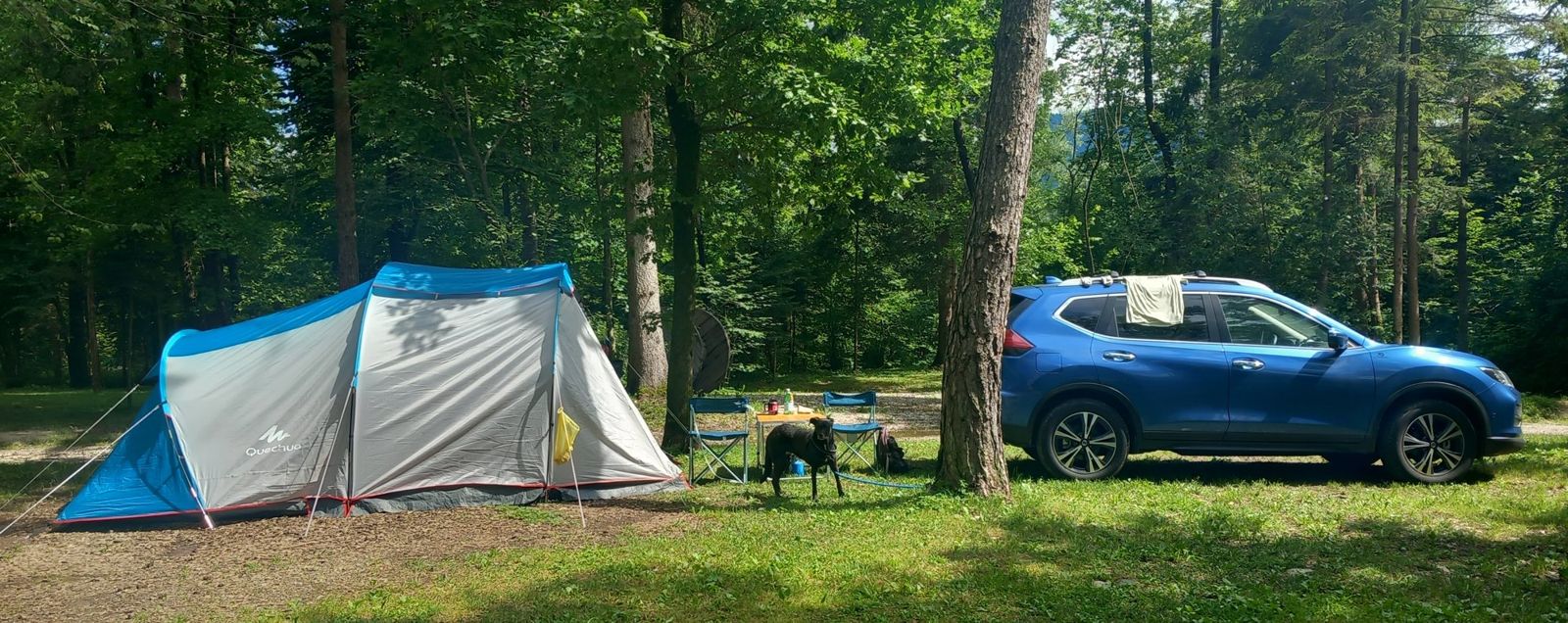
We camp ourselves with the Quechua Air Seconds 6.3 Fresh&Black, an inflatable tent for 6 people with 3 sleeping cabins. More about the base for this tent Camping gear.
Sources
Where does this come from?
- A.S.Adventure: how to choose the best tent
- ADAC: Dachzelte im Test
- ANWB tent test 2025 (dome tents)
- ANWB: 8 compact family tents (2020)
- ANWB: choosing a tent
- ANWB: pitching a tent firmly
- ANWB: camping with the family for the first time
- ANWB: how we tested the tents (2025)
- Pitchup: buying a tent
- Stiftung Warentest: Zelte im Test (July 2026)
All sources were opened on October 15, 2026 and loaded at that time. This is general information, not medical or legal advice. Rules and prices change: Check them shortly before departure. Note: Most sources are Dutch.