

Croatia
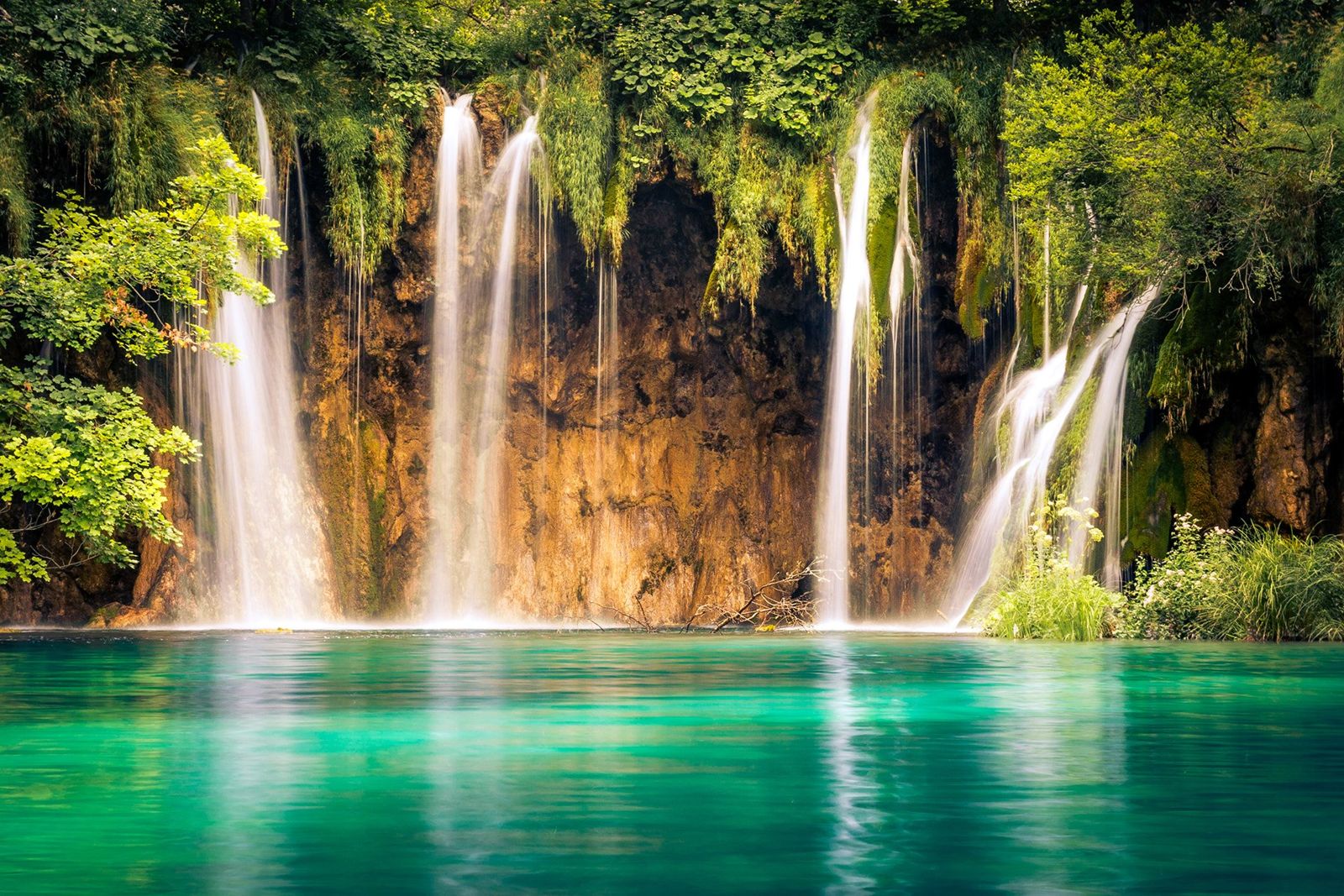
Waterfalls, islands and an endless coastline.
Overview
In brief
- Travel time
- 10–14 days (our estimate)
- Best time to travel
- may–Jun, Sep (our estimate · Full table)
- Distance from London
- ± 1,600 km to Zagreb (approx., via route planner · plus the Channel crossing by Eurotunnel or ferry)
- Driving days
- 3 driving days (our estimate)
- Tolls and vignettes
- No vignette; toll per section on the motorway (Details and source)
- Paying
- euro
- EU member
- yes
Distances were calculated once with OpenStreetMap (OSRM) from London to the capital; your actual route may be longer or shorter. For London, the Channel crossing (Eurotunnel or ferry) is not included. Driving days assume at most about 750 km per day with children (our estimate).
Practical
Good to know
Money and payments
You pay with the euro. With a map and contactless pay works in cities, supermarkets and larger campsites usually easily. Nevertheless, have some cash with you for small campsites, market stalls and parking machines (our experience).
Language and handy words
A few words work wonders, even with the campsite neighbour's kids:
- Dobar dan: good day
- Hvala: thank you
- Molim: please
- Doviđenja: goodbye
Documents and border
This is an EU country: you travel with a valid passport or ID card, and children also need their own valid travel document. Check the travel advice just before you leave.
Health and safety
Take your European Health Insurance Card (EHIC, on the back of your health insurance card or available from your health insurer): it gives you necessary care in public healthcare under local conditions. Travel insurance is still wise, for example for repatriation. The European emergency number is 112.
Source: europa.eu (EHIC)
Traffic rules that matter
From 1 November to 31 December In March, you must also switch on low or daytime running lights in Croatia during the day; Otherwise, only in poor visibility. The per mille limit is 0.5, but 0 for drivers under 24. On many important roads from November 15 to 15. April winter tires or snow chains mandatory. Mandatory in the car: warning triangle, high-visibility vest, bandage box, spare lamps (not for xenon or LED) and a spare wheel or tyre repair kit. Children under 150 cm drive in a suitable child seat.
Source: ANWB
Best time to travel
May, June and September are pleasant: warm sea, less hustle and lower prices than in July and August (our assessment).
Always check the current rules (tolls, vignette, entry requirements) just before you leave.
On the road by car
Tolls and vignettes
| What | Price passenger car | Where to arrange it | Source |
|---|---|---|---|
| Motorway toll (per section) | current price: see source | draw the ticket at the entrance, pay at the departure at the toll station; from 1 March 2027 Registration (previous registration) | Crolibertas (Hrvatske autoceste) price checked Oct 2026 |
Buy vignettes only through the official channels: other sites often charge extra. A caravan or camper van may fall into a different class; check this with the source.
Personal
Our experience: Poreč
In Poreč we stayed at Camping Bijela Uvala, at Zelena Laguna, just south of the town. It was super beautiful there.
The campsite is located directly on the sea, with pebble and rocky beaches along the whole coast. Many pitches are under old trees, so you have shade when it’s hot. There are swimming pools, a supermarket and a few restaurants. In the center of Poreč you walk about half an hour.
On summer evenings around nine o’clock there is a fireworks display at Plava Laguna, very close to Poreč. From June to August inclusive, fireworks boat tours depart from the port, then you can see it from the water.
Nature
More beauty in Croatia
Where are you going?
Regions explained
Istria
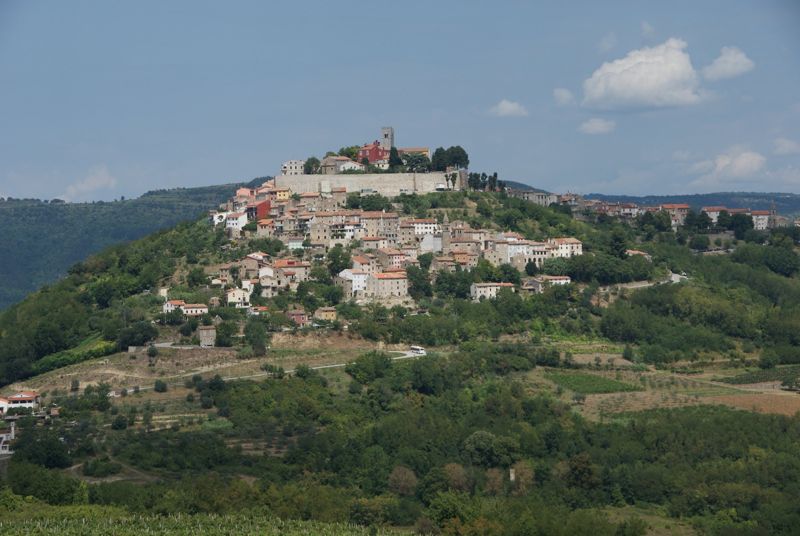
The peninsula in the north, close to all who come from the Netherlands. Many large campsites by the sea, old towns like Poreč and Rovinj and a green hinterland. Great for a first camping holiday with children.
Source: camping.hr
More about where to stay by country · More about campsites in this country
Kvarner and the islands
Around Rijeka are islands such as Krk and Cres; You can reach Krk over a bridge. Quieter than Istria in the main season, with pebble beaches and clear water.
Source: camping.hr
More about where to stay by country · More about campsites in this country
Lika and the Plitvice Lakes
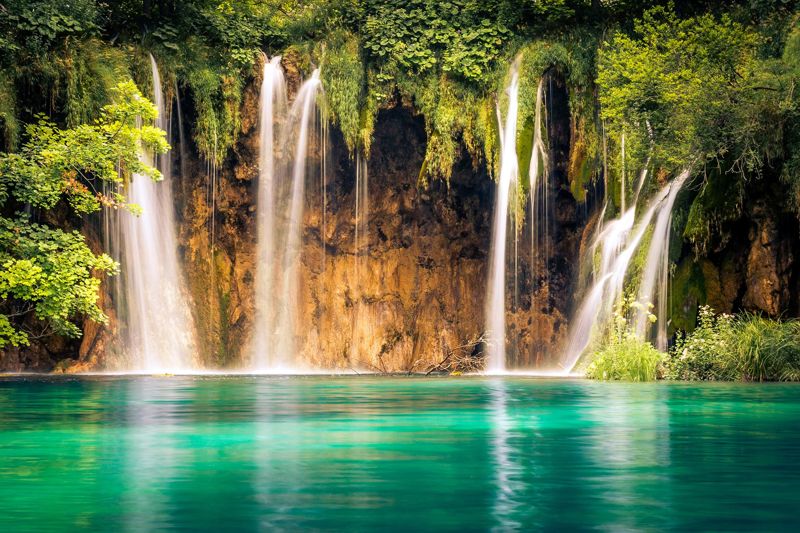
In the countryside lie the Plitvice lakes: terraced lakes with waterfalls, UNESCO World Heritage. You walk over wooden webs there, which is well feasible with children.
Source: UNESCO: Plitvice
More about where to stay by country · More about campsites in this country
Dalmatia
The long coast in the south, with Zadar, Šibenik, Split and Dubrovnik. Warmer and fuller, with Krka and Paklenica as nature excursions. Suitable for families who want to drive more miles.
Source: np-paklenica.hr
More about where to stay by country · More about campsites in this country
On the road
Suggested route by car
A route of 10 to 14 days from north to south and back, with a few fixed locations instead of continuing every day (our assessment). Check the travel times in your route planner.
- Days 1-4: Istria, for example near Poreč: beach, Istralandia and a day trip to Brijuni.
- Days 5-6: Plitvice: go in early with an online ticket with a time slot.
- Days 7-10: North Dalmatia: Zadar, Paklenica and Krka.
- Days 11-14: via Kvarner (Krk) back north.
Camping
Where do you camp?
Large campsites by the sea in Istria
In Istria there are many large campsites with pools and animation, such as Bijela Uvala near Poreč. Practical with children, but in July and August more expensive and fuller (our assessment).
Source: istracamping.com
More about wild camping and campsites by country · More about camping gear
Camp Korana near Plitvice
The National Park has its own campsite, Camp Korana, not far from the lakes. So you are early at the entrance in the morning before it gets full.
Source: np-plitvicka-jezera.hr
More about wild camping and campsites by country · More about camping gear
Small family campsites
In the islands and in Dalmatia, there are many small campsites (retailings) with a family in the garden. Quieter and often cheaper; You can find them on the official camping portal.
Source: camping.hr
More about wild camping and campsites by country · More about camping gear
Gear for this region → (tent, gas, mosquitoes, sleeping bag)
Outings
With kids
Brijuni
By boat from Fažana to the islands of the Brijuni National Park, with a safari park and dinosaur tracks. A real day trip for children.
Source: np-brijuni.hr
Istralandia
A water park in Istria with slides and a wave pool. A nice change from the beach.
Source: istralandia.hr
Paklenica
A gorge at Starigrad, where you walk on a good path between high rock walls and watch climbers. Start early, because it gets warm there.
Source: np-paklenica.hr
Outings
Fun activities with kids
Water parks, karting, trampolines, bowling, zoos and outings for a rainy day: concrete addresses, chosen with children of about 7 and 9 in mind. We only mention places with their own website, which we checked on 14 October 2026. Opening times and prices change: always check the website.
Our favourites
Plitvice Lakes National Park
The famous terrace lakes with waterfalls, over wooden walkways. The park offers circular routes of different lengths with parking boat and panoramic railway; Choose a short route with children. Reserve tickets in summer.
Website: np-plitvicka-jezera.hr
Tickets/tour via Viator → Ad · affiliate link
Dinopark Funtana
Walking park with life-sized dinosaurs, shows and play equipment; Ideal for 7 and 9 years.
Istralandia
A large water park in Istria with many slides and a wave pool, right by the motorway.
Krka National Park
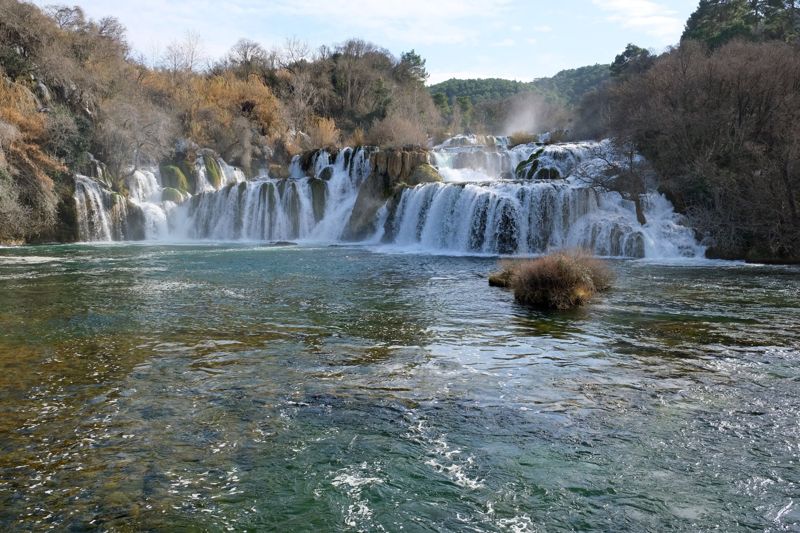
Waterfalls and wooden walkways along the Krka with the famous Skradinski buk. From Skradin there is a parking boat; Bathing is no longer allowed there.
Tickets/tour via Viator → Ad · affiliate link
Lokrum Island
Green island directly in front of Dubrovnik, by boat from the old port. Peacocks, a botanical garden and the saltwater lake "Dead Sea", where children can bathe well.
Tickets/tour via Viator → Ad · affiliate link
Amazinga (trampoline park)
A large family centre with a trampoline park of 1800 m² with 14 attractions; according to the website for children from 6 years, younger children use the mini ninja course.
Local cuisine
Food to taste
A few dishes you can try with the whole family:
Show all dishes (4)
Ćevapi
Small grilled chopped rolls with bread, onions and ajvar (paprika sauce). Almost every child likes them.
Peka
Meat or fish with vegetables, cooked slowly under an iron bell with glowing coal. Often you have to order it a few hours before.
Fritule
Small fried dough balls, a bit like Dutch oliebollen, with icing sugar.
Istrian truffle and olive oil
In the interior of Istria you see pasta with truffle and local olive oil on the menu.
Look further
Discover more
Campsites by name, day trips, events and things you had better avoid, each with a source.
Show all tips (3)
Featured campsites
At ACSI Eurocampings you will find Plitvice Holiday Resort (Grabovac, close to the lakes), Campsite Polari (Rovinj) and Campsite Valkanela (Funtana) in Istria as well as Camp Marina near the Krka National Park. In July and August, places in Istria and northern Dalmatia are almost full: reservations in time.
Source: ACSI Eurocampings: Croatia
Day trip: Pula Arena
The Roman amphitheater of Pula is one of the best preserved in the world and can be combined with a camping holiday in Istria. In the summer there are also concerts and film evenings Look at the sides of the streets.
Source: pulainfo.hr
Avoid: forgetting tolls and tunnels
Almost all motorways are subject to tolls; You pay extra for the bridge to Krk, the Učka Tunnel and the Mirna Viaduct. Staying in a car, caravan or motorhome on public roads is prohibited.
Source: ACSI Eurocampings: Croatia
On the road
Practical tips for Croatia
What we would have liked to know before we stood at the Plitvice Lakes and the Krka at the checkout, and a few things for the ride.
Show all practical tips (10)
Plitvice: buy your ticket online
When buying, you choose a day, a time window and an entrance. You must not enter earlier, and you must be at most an hour late. So in summer you do not stand in a long line at the checkout. Source: NP Plitvice
Plitvice: later in the day is cheaper
From June to August inclusive, a day ticket after four in the afternoon is much cheaper; In September, this applies from three o'clock. In the summer of 2026, an adult paid € 40 during the day and € 25 at the end of the day. On a long summer evening you still have light for hours. Source: NP Plitvice price list
Krka: no swimming at the big waterfall
At Skradinski buk you are not allowed to bathe since 2021, as welcoming as the water is. You can only swim in designated places at Roški slap, Stinice and Pisak, from June 1 to 30 inclusive. September and when weather and water levels allow it. Source: NP Krka
Tolls: still with a ticket for now
On the Croatian highway, you draw a ticket at the entrance and pay at the departure, depending on the distance. From March 1, 2027 comes a new system without barriers: Then your license plate is recognized by cameras and you register your car in advance. Source: Crolibertas (Hrvatske autoceste)
Gas bottle: bring enough
You can’t just exchange a Dutch bottle here. Refillable bottles are filled at INA gas stations and some campsites if the last test is not older than five years. However, there are fewer and fewer filling points and sometimes Dutch bottles are rejected. Take an adapter set with you (Croatia usually uses the W21.8 connection) or start with a full spare bottle. Source: ANWB Camping
To Dubrovnik without a border: the Pelješac Bridge
On the way to Dubrovnik you used to always drive a short stretch through Bosnia and Herzegovina near Neum, with two border posts and often long queues in summer. Since 26 July 2022 you drive entirely over Croatian territory via the Pelješac Bridge, and the bridge is toll-free. That saves a border crossing with children who have been in the car for hours. Source: European Commission
Ferry with the car: book or queue in good time
On a number of Jadrolinija routes, your ticket immediately reserves a place for the car on a fixed sailing, for example Split–Stari Grad (Hvar), Split–Vis and Valbiska–Lopar (Krk–Rab). In summer Jadrolinija then asks you to be at the port one hour before departure. On the other routes it is first come, first served; there you are better off arriving one to two hours in advance, and on busy summer days sometimes even earlier. Keep your vehicle registration document at hand when buying. Bikes on the roof? Declare the extra height. With a bike carrier at the back, the total length counts: above 5 metres you need a ticket for a longer car. Source: Jadrolinija (FAQ) · routes with reservations
Bura: check HAK before you leave with a caravan
In strong bura winds, the Croatian automobile club HAK regularly closes stretches of coastal road to motorcycles, double-deckers and cars with a caravan, for example the D8 coastal road between Bakar and Novi Vinodolski. In a severe storm the bridge to Krk sometimes even closes completely, as on 1 April 2026. So check HAK's current traffic information before you leave; it also shows which roads are open. At the campsite: pitch the tent firmly and use all the guy ropes. Source: HAK traffic information · Regionalni.hr (1 April 2026)
Pitching a tent to withstand storms · Which tent suits the coast?
Tourist tax: children under 12 free
At the campsite you pay tourist tax per person per night. How much differs per municipality and season, but under Croatian law children under 12 pay nothing and young people aged 12 to 18 pay half. The campsite must also register every guest in the national eVisitor system within 24 hours of arrival. That is why reception asks for your passport or ID card. Source: Croatian Tourist Tax Act (articles 5, 6 and 22)
Hand in your passport? What the ANWB advises · More about costs
Mosquitoes by day, ticks in the greenery
The LCR reports that diseases you can catch from mosquitoes occur in Croatia, such as dengue, Zika and chikungunya, and advises you to protect yourself well against mosquito bites during the day, between sunrise and sunset. Tick-borne encephalitis (TBE) also occurs; whether a vaccination makes sense is something to discuss with a travel vaccination clinic. Source: LCR
Prices and rules may change. Check the source again just before you leave.
Travel blogs
Stories from Croatia
Affiliate disclaimer: Some links on this site are affiliate links. If you book or buy through one, we may receive a small commission, at no extra cost to you. Our experiences and tips remain independent.
FAQ
Frequently asked questions
Do I need a vignette in Croatia?
No vignettes; toll per route on the motorway. Prices, points of sale and the official source are in the block 'Toll and Vignette' on this page. To tolls and vignettes
Can you wild camp in Croatia?
prohibited outside registered places;Vidation on public roads is not allowed. (Source: ACSI Eurocampings)
What is the best time to travel to Croatia?
May, June and September are pleasant: warm sea, less hustle and lower prices than in July and August (our assessment).
How far is Croatia from London?
From London to Zagreb it is about 1,600 km (calculated with OpenStreetMap; check your route planner). The Channel crossing is not included: with the Eurotunnel (LeShuttle) it takes 35 minutes according to the operator; a Dover–Calais ferry is the alternative. With children, expect about 3 driving days (our estimate).
What must you carry in the car in Croatia?
Mandatory in the car: warning triangle, high-visibility vest, bandage box, spare lamps (not for xenon or LED) and a spare wheel or tyre repair kit. Source: ANWB. All traffic rules are on our page Traffic rules & equipment. To traffic rules · ANWB
Which travel documents do I need for Croatia?
This is an EU country: you travel with a valid passport or ID card, and children also need their own valid travel document. Check the travel advice just before you leave.